
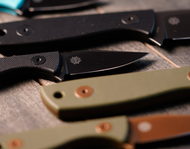
9 Features to Evaluate in Fixed Blade Knives Before Buying
Posted by River's Edge Cutlery on 9th Sep 2026
A fixed blade knife is simpler and less likely to fail than a folder, even if the folder in question has a super knife lock, like a Tri-Ad lock. That being said, there are many who wouldn’t go into the field or in the line of duty without a reliable fixed blade knife. Some even carry small fixed blades for EDC instead of folders.
Of course, as is the case with any tool, the utility you get from it will be a response to how wisely you selected it given your intended use cases. That being said, here are some of the things to evaluate in fixed blade knives before you buy.
Size and Weight
How large and heavy a fixed blade is will impact how easily you carry it and whether or not it can do what you need it to.
For general purposes applications, a fixed blade of 2.5 to 4 inches is more than adequate. Rarely is anything larger needed except for camp knife chores like batoning, and even a knife with a 2.5 inch blade offers a lot of utility that will likely surprise you if you’ve never routinely carried one this small before.
Blade Profile
The blade’s profile, that is, its general shape, will also impact how effective it is for the tasks for which you intend to use it.
Common blade profiles include drop points, spear points, and tanto points, as these are utilitarian and highly versatile.
If you need a finer point, a knife with a needle point or a clip point is best. A more robust point like a sheepsfoot or a tanto or reverse tanto is unlikely to break.
Blade Steel
Blade steel is also critical here. The three main attributes you want to consider are hardness (which results in better edge retention), toughness (which hedges against breakage) and corrosion resistance (which helps prevent rust).
Some fixed blade knives are made with super steels like S90V and MagnaCut which take and hold fine edges, which are very tough, and which are very corrosion resistant.
However, even some budget steels like 1095, which is used to make most ESEE knives, can be very practical because it is softer and therefore easier to sharpen in the field. Just note that some steels, like this, will rust very easily.
Is There a Blade Finish?
Many fixed blade knives, especially those that are made with steels that are not corrosion resistant, sport blade finishes like PVD or powder coat finishes. These help protect the steel underneath from rusting. They can also improve visibility (so you don’t lose the knife if you set it down) or reduce reflectivity, aiding in concealment and discretion.
Serrations or No Serrations?
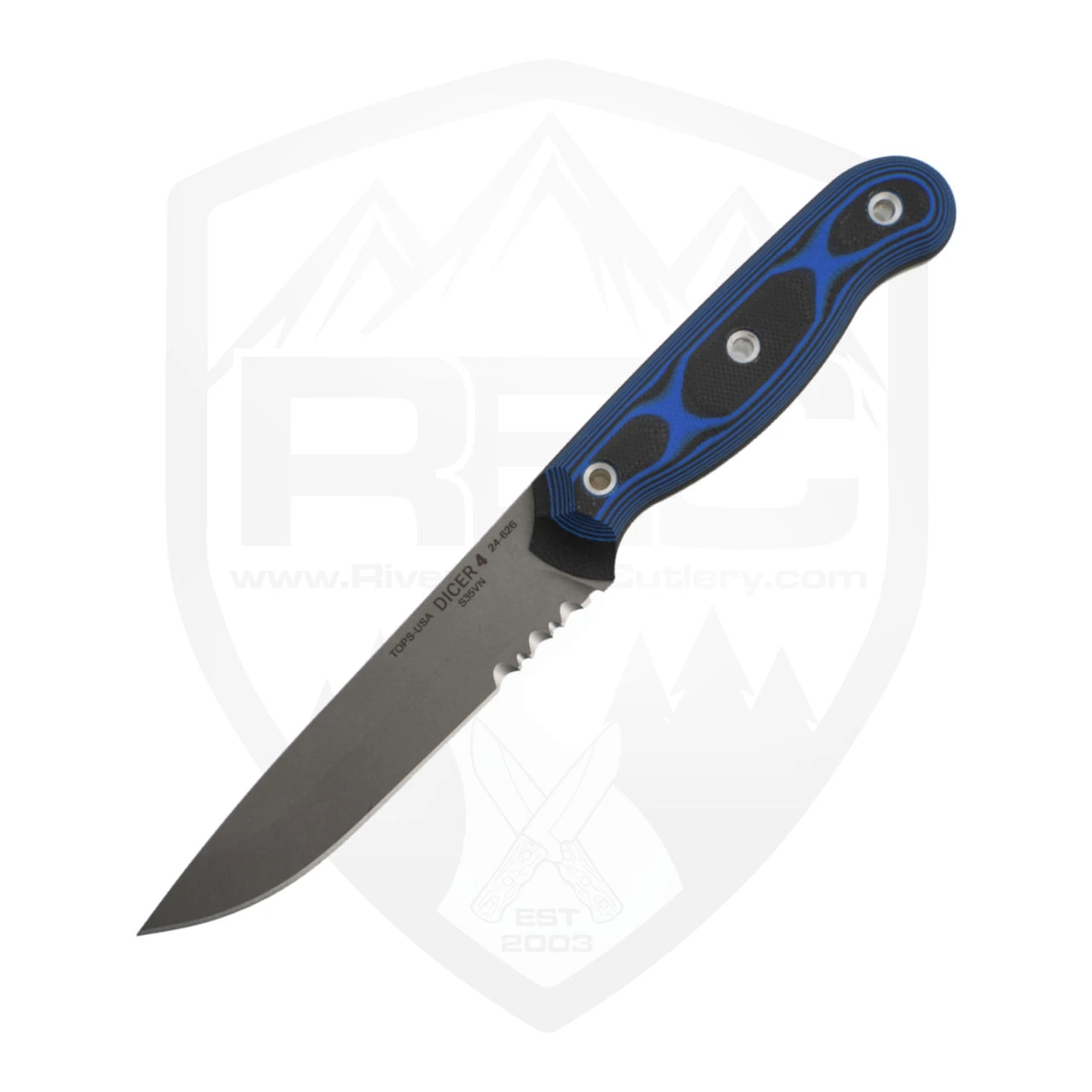
For many users, a straight edge is more than adequate. Some, however, might prefer fixed blade knives with partial serrations because partial serrations will prove much more effective at cutting through rope, wood, plastic, and other tough materials.
Is the Spine Square?
If a fixed blade knife does not have a square spine, it should not be considered a dealbreaker, but for those that use their fixed blade knives as survival or bushcraft knives, a square spine is necessary to strike sparks from a ferro rod fire starter.
Handle Scale Material
Natural scale materials like wood, horn and bone are pretty, but they are relatively fragile and must be kept clean and well maintained or they will deteriorate. Synthetic scale materials like carbon fiber, G10, Micarta and similar materials, along with metal alloys, are lower in maintenance requirements and also physically more durable as well.
Can the Scales Be Easily Upgraded or Replaced?
Many knife scales are fastened with hex or Torx hardware and spacers and can easily be removed or replaced for knife cleaning, maintenance, or just to make an upgrade.
Knife Sheath Material
Most fixed blade knives come with a sheath that’s made of leather or else a thermoplastic like nylon or Kydex. While leather is softer and more comfortable, it is not as versatile as thermoplastics especially with respect to how it can be rigged. Also, you should keep in mind that leather will cause many steel alloys to rust by trapping moisture against the blade, if the knife is stored in the sheath for a prolonged period of time.
Other Features
Lastly, you should also consider some of the following selling points and features as you evaluate fixed blade knives for your use.
- Is there a lanyard hole?
- Is there an exposed pommel that can be used as a striking tool?
- Is there a bow drill divot in one of the scales?
Explore Fixed Blade Knives Here
Hopefully this guide set you off on the right track towards your purchase of your next fixed blade knife. Check out our full catalog here and if you have any questions about what we sell or need some recommendations, get in touch with us and we will be more than happy to help you out.