
Folding Knives: Common Lock Types Explained
Posted by River's Edge Cutlery on 18th Aug 2026
Folding knives are available in a dizzying array of profiles, patterns, knife steels, and general sizes. In addition to blade steel and blade profile, one of the most important things you should look at in a folding knife is the lock mechanism it uses. Here are some of the most common ones on the market right now.
Liner Lock
All in all, liner locks are probably the most common type of lock in folding knives right now. In a liner lock, a liner inside of the knife frame or scales springs inward and wedges under the blade when it is opened.
Liner locks are relatively affordable to manufacture and are mechanically simplistic, which makes them popular. They can also be engaged and disengaged with one hand.
With that being said, they are not as strong as most of the other lock types mentioned here, can be disengaged accidentally if you twist the knife, and on top of that, usually favor right-handed users. In addition, liner locks require you to put your fingers in the path of the blade when closing the knife.
Frame Lock
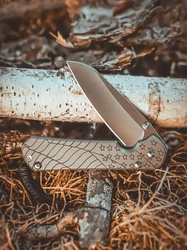
A frame lock is just like a liner lock, except instead of having a separate locking liner, a frame lock has a portion of the entire frame that springs inward and wedges under the blade to lock it open.
In all other respects, a frame lock is functionally the same as a liner lock, except that it is considerably stronger and less likely to intentionally disengage when torquing or twisting the knife.
Cross-Bar Lock
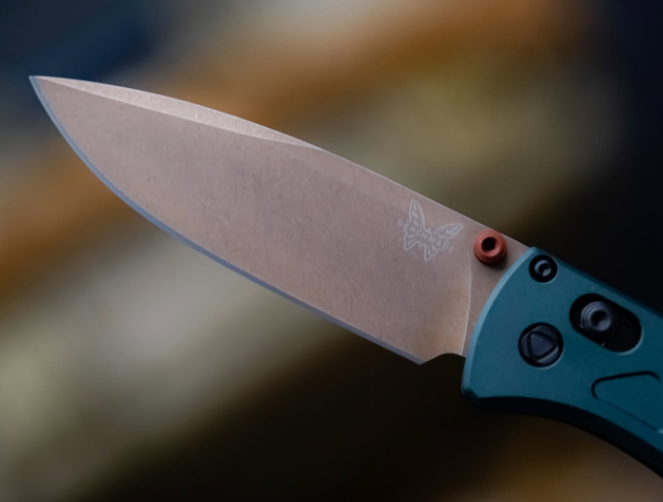
The cross-bar lock was pioneered by Benchmade, who calls it an AXIS Lock, and it has been mimicked by countless other manufacturers that call it a DuraLock, Clutch Lock, and Pivot Lock, among others.
In a bar lock configuration, there is a cylindrical bar that rides in the knife frame in a channel behind the blade, and which is held in place under tension from a U or Omega-shaped spring.
When the knife is opened, the spring is compressed, and the bar slides into a notch at the base of the blade. This is one of the strongest knife locks out there, and has a lot of other advantages, too.
For one, it is very fidget friendly and unlike both liner and frame locks, a bar lock does not favor a right or left handed user, making it ambidextrous. In addition, a bar lock is almost impossible to accidentally disengage, and can generally only be disengaged by a deliberate action.
On top of that, cross-bar locks enable you to open and close the knife with one hand, and critically, do not require you to put your fingers in the path of the blade when closing the knife.
Button Lock
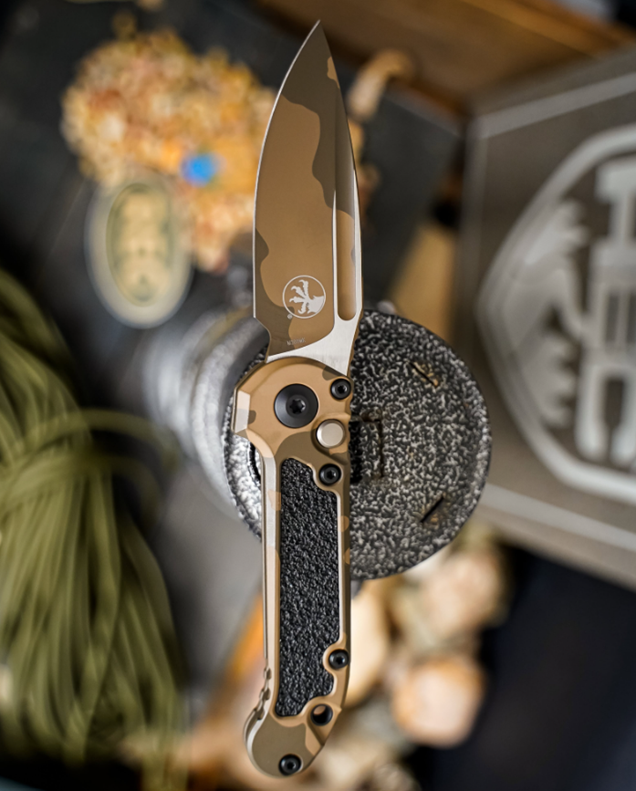
The internal mechanism of a button lock can vary, so not all button locks offer the same strength, but in terms of operation, they are all functionally the same. You depress a button on the side of the knife, which enables you to close the blade. In some but not all cases, the button lock can be used to lock the knife closed as well as open, preventing accidental deployment in a pocket.
Button locks can be fairly strong, though they are not generally as strong as bar locks, and they also give you the flexibility to close the blade while keeping your fingers out of the blade’s path. That said, button locks can occasionally disengage depending on how you are gripping the knife, and most favor a right-handed user.
Lock Back
The lock back is an older design, one that consists of a lock bar within the knife that wedges and locks the blade open and which is held in place via a spring. This is the lock type made famous by the venerable Buck 110 Folding Hunter.
Lock backs can be engaged with one hand and are comparatively strong, but they also generally require two hands to close, though they will keep your fingers out of the way of the blade’s path.
Compression Lock
Lastly we have a Compression Lock, which is actually not that common but which is on here because it is popular on Spyderco knives.
A Compression Lock consists of a lock bar at the top of the knife which is similar to a liner lock, but which is stronger and which is situated at the top rather than at the bottom of the knife near the edge.
It is stronger than a liner lock, unlikely to disengage, and since it is on the spine side of the knife, you can keep your fingers away from the edge when disengaging the lock and folding the knife.
Explore Folding Knives Here
Want to know more about these lock types, or about other locks used in folding knives that aren’t covered here? Get in touch with us directly and we will be more than happy to assist, whether you have questions about a lock type or about a specific brand or model.